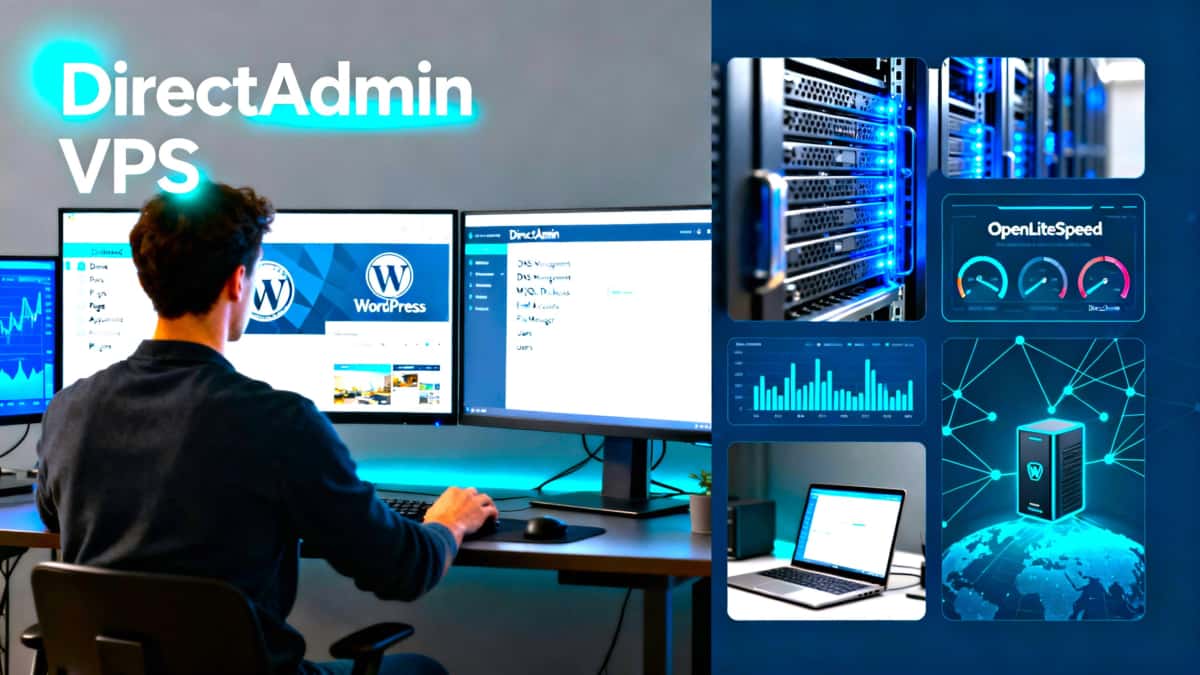
DirectAdminVPS.com documents a practical, real‑world system for building and operating an unmanaged VPS using DirectAdmin web control panel, instead of cPanel or Plesk.
DirectAdmin VPS Phase of WordPress Site Guides
This is where you are now. This entire site is Phase 1 of a suite of WordPress Site Guides. and it involves getting a self-managed VPS online and fully operational using the DirectAdmin web control panel. Details to finalize VPS readiness using DirectAdmin are in easy to follow checklists. The focus is on predictable setup, step-by-step configuration & usage, full DNS, automatic SSL certs, firewall, mail, OpenLiteSpeed, and long‑term reliability — before any applications are installed.
Other Phases of WordPress Site Guides
After this VPS with DirectAdmin is configured and operational, remaining phases continue with other focused topical sets of checklists. Remaining phases are covered in our other WordPress Site Guides.
of
This brand new site in 2026, viewed by 25 countries worldwide, exists to make server infrastructure easily configured & stable, using repeatable checklists. Then, you’re in a position for running and setting up downstream projects and apps, like WordPress sites, which are then easy to deploy and maintain.
What This Site Covers
- Provisioning and hardening an unmanaged VPS
- Installing and securing DirectAdmin
- Preparing the server to receive its first domain
- Configuring DNS, SSL, and email deliverability
- Establishing update, backup, and maintenance routines
Application‑level work, including WordPress installation and site building, is intentionally covered on a separate site to keep scope clear and focused.
Who This System Is For
- Solo administrators and builders running their own VPS
- Anyone comfortable following documented checklists
- Users who want control without high managed hosting costs
- Builders planning to host WordPress on a stable foundation
How the System Is Organized
Content on this site follows the same sequence used in production environments. You can start from the beginning or jump directly to the phase that matches your current setup. All checklists end with a “Next Steps” section with links to return you to your originating source.
Complete Setup Guide: Start Here
Begin with an overview of the end-to-end system and its workflow. See the Complete Setup Guide with all the checklists in a successive order.
VPS
Look at all aspects of a VPS. Read articles to decide whether an unmanaged DirectAdmin VPS is the right fit and understand intentional scope. This VPS section covers the lowest level of getting the virtual private server established with its platform, services, SSH and PuTTY access, security, fast web server, and more.
DirectAdmin
View DirectAdmin category of checklists and procedures referencing installation and configurations of the popular DirectAdmin web control panel. Ensure your server is secure, updated, and ready to configure much easier with this fantastic web control panel interface.
Domain Management
View Domain Management step-by-step checklists and procedures to bring domains online with DNS, SSL certificates, and reliable email delivery.
Planning for WordPress
View Planning for WordPress to see this final planning section. It emphasizes how to prepare the VPS to be able to receive the installation and setup of WordPress. The focus is to ensure the server will be configured to very well so that WordPress will install smoothly and operate with high performance system requirements for satisfying popular theme builders prerequisites of today.
Why This Stack
Visit the external sources’ sites to read more about this full stack’s foundation.
- AlmaLinux — stable, enterprise‑grade operating system
- DirectAdmin — lightweight, high‑reliability control panel
- OpenLiteSpeed — high‑performance web server with modern protocols
This site itself runs on this same stack. The guides reflect how the system is configured and maintained in production.
Concluding Next Steps
All checklist pages will have a “Next Steps” section at the very end. It’s shown there for ease of returning to an exact step in any checklist you came from. And, because several different checklists involve reused sub-checklists, you’ll find the list of each one to return to. It also may show a directly related page to go to for continuation guidance.
Next Steps – Where to Start
As this is the home page, it’s recommended that you begin by visiting the Complete Setup Guide, which is an extensive step-by-step list of checklists, performed in order.