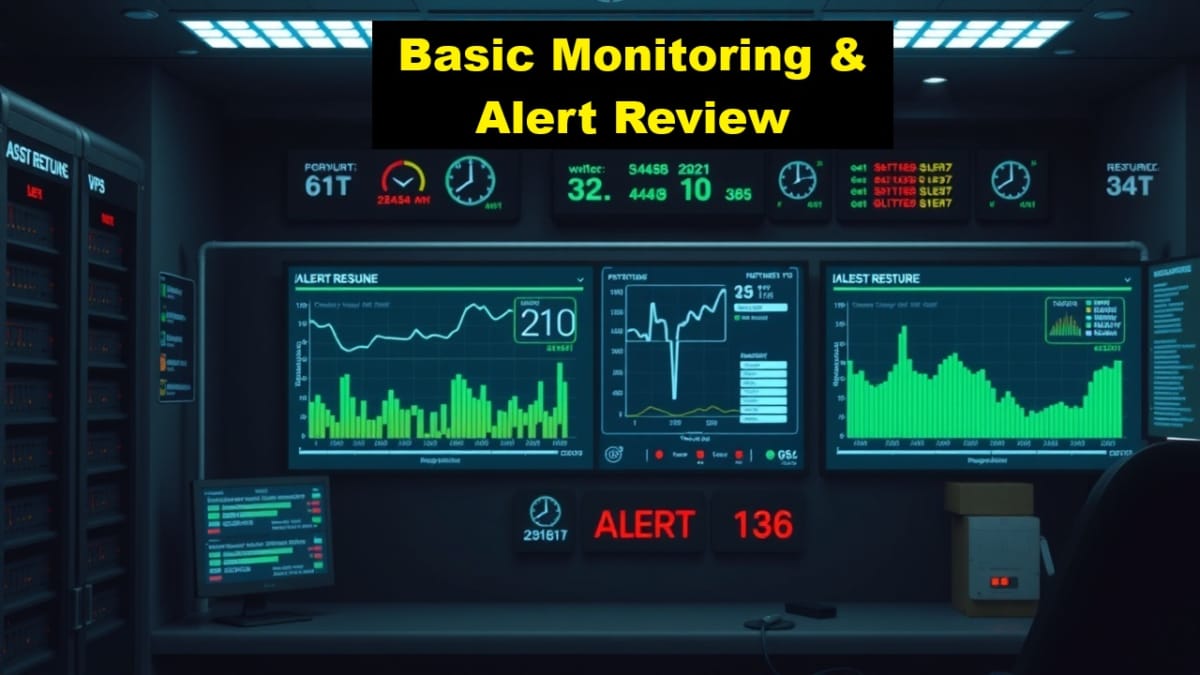
This routine provides a lightweight, tool-agnostic process for reviewing monitoring signals and alerts on a DirectAdmin-managed VPS. It is designed to confirm awareness, detect early warning signs, and guide operator judgment before issues escalate.
Scope and intent
- Confirm that basic monitoring signals are visible and understood
- Detect early indicators of instability or degradation
- Support informed decisions without relying on complex tooling
- Complement log review and resource sanity checks
When to run this routine
- During routine maintenance review
- After updates or configuration changes
- When alerts are triggered or notifications received
- When investigating performance or availability concerns
Prerequisites
- Access to whatever monitoring, alerting, or notification mechanism is in place
- Familiarity with what is considered normal behavior for this VPS
1. Review active alerts
- Check for any active or unresolved alerts
- Identify the resource or service involved
- Note alert severity, frequency, and duration
2. Review recent alert history
- Scan recent alerts even if they auto-resolved
- Look for repeated alerts affecting the same resource
- Identify patterns rather than isolated events
3. Validate alert relevance
- Confirm alerts align with real system conditions
- Identify false positives or overly sensitive thresholds
- Note alerts that trigger too late to be useful
4. Cross-check with system state
- Compare alerts against current disk, memory, and load conditions
- Confirm alerts are supported by observable system behavior
- Correlate alerts with recent maintenance or changes
5. Confirm notification delivery
- Ensure alerts are being delivered to the expected destination
- Confirm no missed or delayed notifications
- Verify alert fatigue has not caused important signals to be ignored
6. Decide on follow-up action
- No action: alerts are understood and benign
- Monitor: trends are forming but not yet actionable
- Investigate: alerts indicate abnormal or worsening conditions
7. Record observations
- Document notable alerts and trends
- Record any threshold or configuration concerns
- Note whether further routines should be run
Completion criteria
- All active and recent alerts have been reviewed
- Alert signals are understood in context
- Clear decision made to ignore, monitor, or investigate
Next step — based on your current state:
- If alerts indicate errors or instability, proceed to Log Review Routine.
- If alerts align with resource pressure, proceed to Disk, Memory, and Load Sanity Check.
- If alerts followed recent updates, consider After Server Update Verification Checklist.
- If no issues are detected, return to normal operations or your maintenance cadence.